I'm surrounded by some of my favored Sunday morning things.
It has taken a while to get over Tim Russert's absence from Meet the Press, but I am getting there. Politics may never again be so much fun. The show is not what it was, but that is only right, and it is still a nice weekend habit. I am respectful of Tom Brokaw, reflexively.
I taught Tom's daughter Sarah, so I am a close family friend. Okay, that's not true. But I *did* speak with the man on the phone once, on a Friday evening, about a grading/attendance issue that intersected, thematically, with a ski trip discussion. My reaction to that, unfortunately, was what most university profs might feel when put in the situation of having a "teacher's conference" with the parent of someone purporting to be an adult.
So he had the Dean of Undergraduate Affairs on speed dial! Who knew?
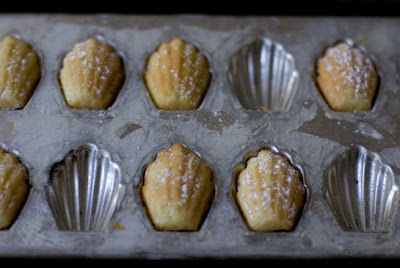
A flash of memory. (No -- not
madeleine* calibre.) My first semester teaching -- and it seemed like one of my classes was made up of nothing but recidivists, among whom figured the son of a minor starlet. Okay, some people think of her as a major starlet, but these people are of the ilk to host
Three's Company marathons. So... I lost quite a few students as the drop deadline came and went, and confess that I encouraged some of the more borderline to take advantage of it. The real power of advising on this issue comes into play when you want a borderline student to stick it out -- when you know, sneaky little you, that they will turn out okay.
Anyway, I believe he was a Junior at that point, possibly even a Senior -- in either year, he was in the position of *needing* to take, and do well in, my class. It was perhaps a week past the date he could have dropped, and it seemed to me that he had been considerably more obnoxious than usual. His teeth glowed whiter. His tan-from-a-can emitted an eerie orange halo. He thought winking a clever thing. I guess he could not help but be an anachronism, having grown up in LaLa Land, suckled on Artificial Everything.
I was returning their third major test, which he failed. As we got ready to go over it, he came up to me and asked if we might speak in the hall for a second. Most everyone was engrossed in double-checking my math, so I said, "Sure thing!" and out we went.
"Madame, I don't think you realize who I am."
I am not kidding you. He actually said that, standing there all orange and gleaming white, getting ready to lay a wink on me, The Undisputed, and Still Champion, Madame.
It was all downhill from there.
He finagled** a drop, and went on to soaring mediocrity.
I like the way Tom Brokaw says "terror." Unfortunately, we get to hear the word all too often.
Laura Bush is today's guest, and I have to wonder for the umpteenth time how such an intelligent, smart, well-spoken person ended up partnered with our relatively gauche and tongue-tied, intellectually-challenged President. She speaks eloquently about women's rights in Afghanistan and her passion is real, just witness the way facts, opinions, and details flow from her pretty red-lipped mouth.
Hmm, it sounds like I have a crush on the First Lady. Not true. I haven't had romantic feelings for another woman since I was 23.
Why look! The secret service just pulled into the drive! Okay, okay, I have no designs on the First Lady, and the President is a top secret brainiac for whom I have the utmost... {fit of coughing}
Bianca and Fred sleep in -- both make Saturday night noises about going to church and charge me with waking them in time, and both grunt "go-away-I'm-not-going" ("va-t-en, j'n'y vais pahhh...")when it comes down to leaving the bed's warmth on Sunday morning.
God, I love MadTv's Soprano skits! [Ted Turner took Laura Bush's place, cuing my exit and escape to the Comedy channel.]
Even the Stuart skits crack me up, but that sometimes worries me.
This coffee is perfect. We have developped an alarmingly bad habit, but cannot find a better way -- the three of us have differing opinions about correct strength and brewing technique, so there is never the cozy offer to fix one other a cup, and gone are the days of making a pot for everyone. When entertaining the public, we avoid coffee service, preferring instead to liquor up our visitors. (Don't fret! We keep them well away from the Old Masters and the Manor's "
extensive decorative art collection of baroque furniture -- mostly cabinets, commodes, and French stools.")
*From Swann's Way (this is the Penguin trans. See the
Moncrieff trans. at
Project Gutenberg):
For many years, already, everything about Combray that was not the theater and drama of my bedtime had ceased to exist for me, when one day in winter, as I returned home, my mother, seeing that I was cold, suggested that, contrary to my habit, I have a little tea. I refused at first and then, I do not know why, changed my mind. She sent for one of those squat, plump cakes called petites madeleines that look as though they have been molded in the grooved valve of a scallop shell. And soon, mechanically, oppressed by the gloomy day and the prospect of another sad day to follow, I carried to my lips a spoonful of the tea in which I had let soften a bit of madeleine. But at the very instant when the mouthful of tea mixed with cake crumbs touched my palate, I quivered, attentive to the extraordinary thing that was happening inside me. A delicious pleasure had invaded me, isolated me, without my having any notion as to its cause. It had immediately rendered the vicissitudes of life unimportant to me, its disasters innocuous, its brevity illusory, acting in the same way that love acts, by filling me with a precious essence: or rather this essence was not merely inside me, it was me. I had ceased to feel mediocre, contingent, mortal. Where could it have come to me from—this powerful joy? I sensed that it was connected to the taste of the tea and the cake, but that it went infinitely far beyond it, could not be of the same nature. Where did it come from? What did it mean? How could I grasp it? I drink a second mouthful, in which I find nothing more than in the first, a third that gives me a little less than the second. It is time for me to stop, the virtue of the drink seems to be diminishing. Clearly, the truth I am seeking is not in the drink, but in me. The drink has awoken it in me, but does not know this truth, and can do no more than repeat indefinitely, with less and less force, this same testimony which I do not know how to interpret and which I want at least to be able to ask of it again and find again, intact, available to me, soon, for a decisive clarification. I put down the cup and turn to my mind. It is up to my mind to find the truth. But how? Such grave uncertainty, whenever the mind feels overtaken by itself; when it, the eeker, is also the obscure country where it must seek and where all its baggage will be nothing to it. Seek? Not only that: create. It is face-to-face with something that does not yet exist and that only it can accomplish, then bring into its light.
And I begin asking myself again what it could be, this unknown state which brought with it no logical proof, but only the evidence of its felicity, its reality, and in whose presence the other states of consciousness faded away. I want to try to make it reappear. I return in my thoughts to the moment when I took the first spoonful of tea. I find the same state again, without any new clarity. I ask my mind to make another effort, to bring back once more the sensation that is slipping away. And, so that nothing may interrupt the thrust with which it will try to grasp it again, I clear away every obstacle, every foreign idea, I protect my ears and my attention from the noises in the next room. But feeling my mind grow tired without succeeding, I now compel it to accept the very distraction I was denying it, to think of something else, to recover its strength before a supreme attempt. Then for a second time I create an empty space before it, I confront it again with the still recent taste of that first mouthful, and I feel something quiver in me, shift, try to rise, something that seems to have been unanchored at a great depth; I do not know what it is, but it comes up slowly; I feel the resistance and I hear the murmur of the distances traversed.
Undoubtedly what is palpitating thus, deep inside me, must be the image, the visual memory which is attached to this taste and is trying to follow it to me. But it is struggling too far away, too confusedly; I can just barely perceive the neutral glimmer in which the elusive eddying of stirred-up colors is blended; but I cannot distinguish the form, cannot ask it, as the one possible interpreter, to translate for me the evidence of its contemporary, its inseparable companion, the taste, ask it to tell me what particular circumstance is involved, what period of the past.
Will it reach the clear surface of my consciousness—this memory, this old moment which the attraction of an identical moment has come from so far to invite, to move, to raise up from the deepest part of me? I don’t know. Now I no longer feel anything, it has stopped, gone back down perhaps; who knows if it will ever rise up from its darkness again? Ten times I must begin again, lean down toward it. And each time, the laziness that deters us from every difficult task, every work of importance, has counseled me to leave it, to drink my tea and think only about my worries of today, my desires for tomorrow, upon which I may ruminate effortlessly.
And suddenly the memory appeared. That taste was the taste of the little piece of madeleine which on Sunday mornings at Combray (because that day I did not go out before it was time for Mass), when I went to say good morning to her in her bedroom, my aunt Léonie would give me after dipping it in her infusion of tea or lime blossom. The sight of the little madeleine had not reminded me of anything before I tasted it; perhaps because I had often seen them since, without eating them, on the shelves of the pastry shops, and their image had therefore left those days of Combray and attached itself to others more recent; perhaps because of these recollections abandoned so long outside my memory, nothing survived, everything had come apart; the forms and the form, too, of the little shell made of cake, so fatly sensual within its severe and pious pleating—had been destroyed, or, still half asleep, had lost the force of expansion that would have allowed them to rejoin my consciousness. But, when nothing subsists of an old past, after the death of people, after the destruction of things, alone, frailer but more enduring, more immaterial, more persistent, more faithful, smell and taste still remain for a long time, like souls, remembering, waiting, hoping, upon the ruins of all the rest, bearing without giving way, on their almost impalpable droplet, the immense edifice of memory.
And as soon as I had recognized the taste of the piece of madeleine dipped in lime- blossom tea that my aunt used to give me (though I did not yet know and had to put off to much later discovering why this memory made me so happy), immediately the old gray house on the street, where her bedroom was, came like a stage set to attach itself to the little wing opening onto the garden that had been built for my parents behind it (that truncated section which was all I had seen before then); and with the house the town, from morning to night and in all weathers, the Square, where they sent me before lunch, the streets where I went on errands, the paths we took if the weather was fine. And as in that game in which the Japanese amuse themselves by filling a porcelain bowl with water and steeping in it little pieces of paper until then undifferentiated which, the moment they are immersed in it, stretch and bend, take color and distinctive shape, turn into flowers, houses, human figures, firm and recognizable, so now all the flowers in our garden and in M. Swann’s park, and the water lilies on the Vivonne, and the good people of the village and their little dwellings and the church and all of Combray and its surroundings, all of this, acquiring form and solidity, emerged, town and gardens alike, from my cup of tea.
**Unsure of the spelling for "finagle," I ran across this in, of course, the phenomenon of Wikipedia. (I never apologize for my tangential ways; Most of my hard science acumen and winning Trivial Pursuit/cocktail party data bank has thus been acquired... and I know how jealous you all are of my hard science acumen.)
------->
Finagle's Law of Dynamic Negatives (also known as Finagle's corollary to Murphy's Law) is usually rendered:
Anything that can go wrong, will—at the worst possible moment
One variant (known as O'Toole's Corollary of Finagle's Law) favored among hackers is a takeoff on the second law of thermodynamics (also known as entropy):
The perversity of the Universe tends towards a maximum.
The term "Finagle's Law" was first used by John W. Campbell, Jr., the influential editor of Astounding Science Fiction (later Analog). He used it frequently in his editorials for many years in the 1940s to 1960s but it never came into general usage the way Murphy's Law has.
Eventually the term "Finagle's law" was popularized by science fiction author Larry Niven in several stories depicting a frontier culture of asteroid miners; this "Belter" culture professed a religion and/or running joke involving the worship of the dread god Finagle and his mad prophet Murphy.
Hanlon's Razor (or Hanlon's Law) is a corollary of Finagle's law.[clarify] Hanlon's Razor says "Never attribute to malice that which can be adequately explained by stupidity," a variation on a quote from Napoleon Bonaparte.
I dug up Proust and put him properly bedside (don't touch that sentence.).
Oh! Oh!
Dinocroc is on the
SciFi channel! [
Costas Mandylor, Bruce
Weitz, Charles Napier. (2004) Several townspeople step forward to save their community from the jaws of a prehistoric reptile. ] One and a half stars!
Oh! And later, a bunch of
UFC stuff on Spike!
That makes for a happy
bedbound girl!
 I confess that I rolled my eyes, and swore.


 I'm surrounded by some of my favored Sunday morning things.